
They’re racing to build
AI smarter than humans
The companies building it say it could arrive this decade.
No one else has had a say about that.
What are they building?
“Superintelligence” is the word AI experts use for AI more capable than humans at the kinds of work that run the economy.
It sounds like science fiction, and it’s their business plan.
Could they actually build it? The people building it think so – and argue more about when than whether it’s possible.
But the timelines have moved from “someday” to “this decade.” And the AI companies are spending hundreds of billions of dollars in a race to get there first.
Today’s best AI systems complete tasks that take a skilled person about half a day – and that number has been doubling every few months.
AI systems can already act on their own
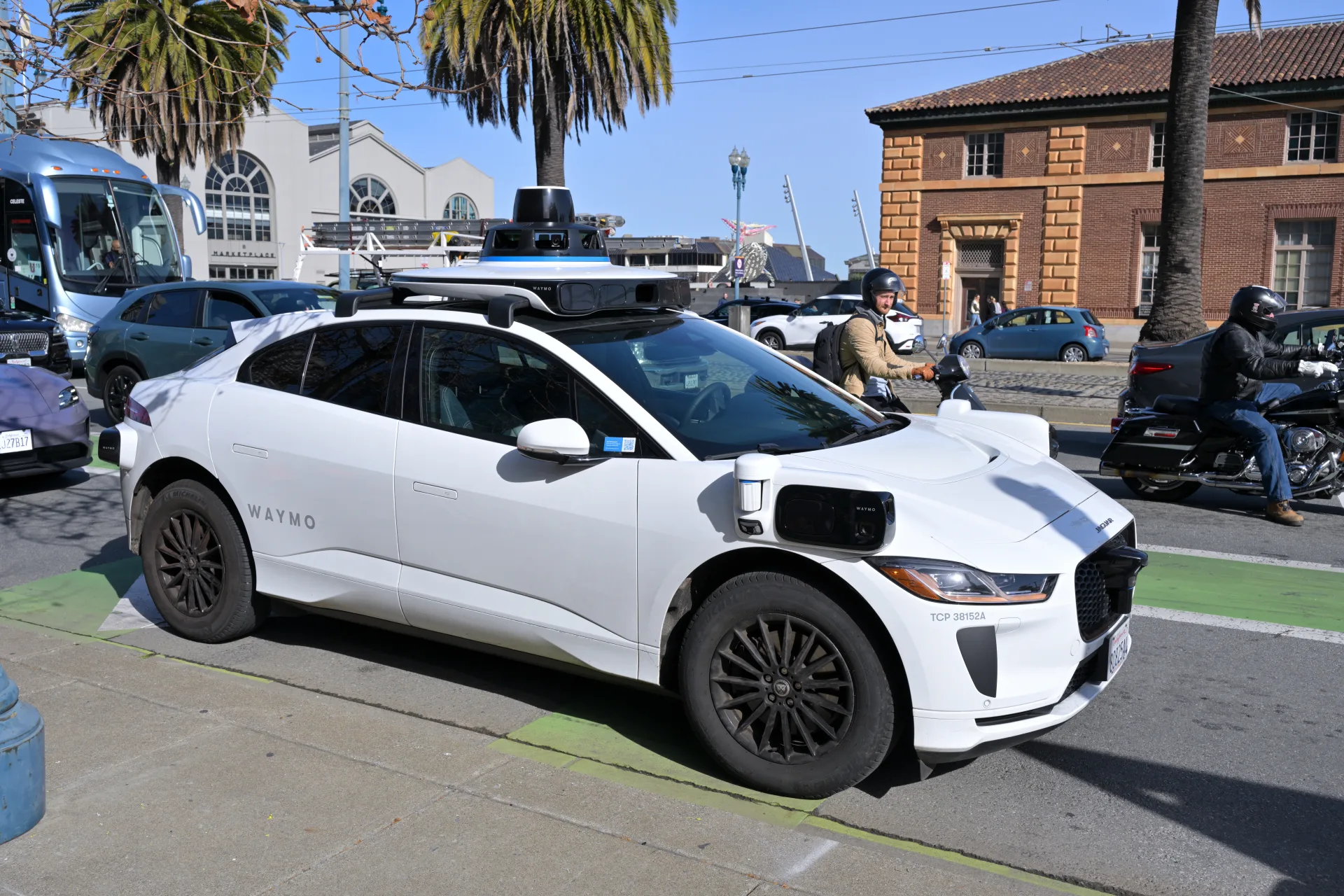
Waymos already carry passengers in San Francisco. Photo: 4300streetcar · Wikimedia Commons · CC BY 4.0
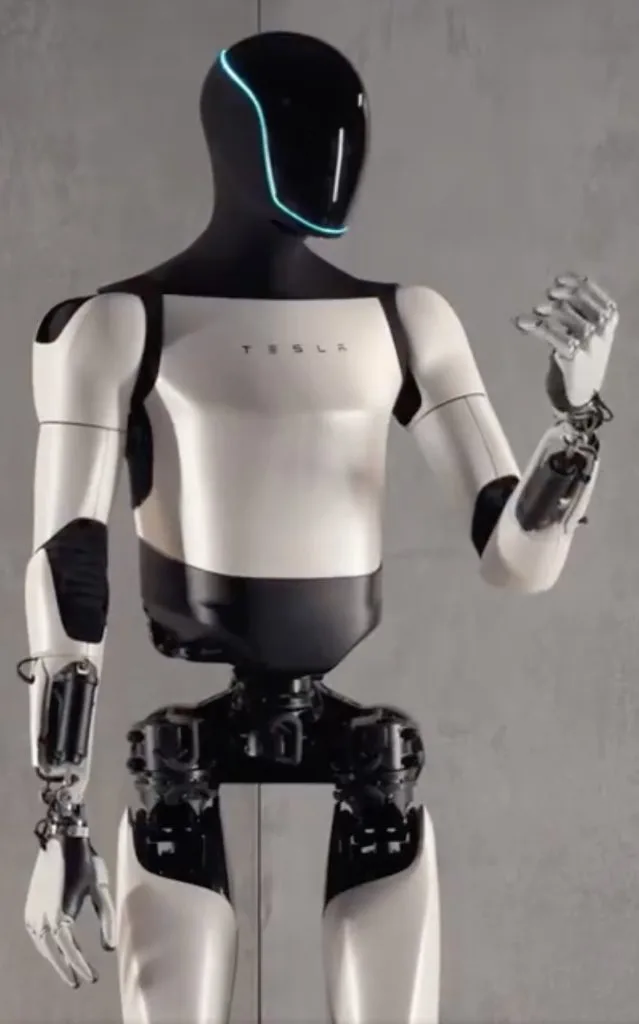
Tesla promotional video, Dec 2023
They create documents. They write code. They can carry out multi-step plans without being told each step.
As robotics improves, that same intelligence moves into physical work – Waymos, drones, humanoid robots.
Today’s AI systems are the least powerful AI these companies say they will ever release – and they’re already hurting people. The AI companies’ playbook: build fast, ship untested, and let someone else pay the price.
A tool makes a worker more powerful.A replacement makes the worker unnecessary.

If an AI can do the entire job, “just learn to use AI” stops being an answer – and neither the AI companies nor our leaders have a real plan for how families keep providing for themselves.
None of this is inevitable. Public pressure is already winning the first real AI safety laws – we’ll show you. First, here’s where this is headed.
How does it work?
Normal software is written line by line, and tested before it's publicly released. But AI is different.
Building an AI system is more like it teaching itself, using more text than a person could read in a thousand lifetimes. The people building it say it’s grown12 more than written.
And its own makers admit they can’t fully explain what it does, or why.
That’s why the people building the most powerful AI systems signed a public statement saying their technology could cause human extinction.
If the engineers who built a plane warned it might crash, nobody would board it. The people building AI signed that warning – and they’re boarding all of us without consent.
Why would anyone keep building something they signed a warning about? Because they’re in a race. Whoever builds AI smarter than humans first gets power no company – no country – has ever had.
When that’s the prize, every month matters more than any promise. Even the insiders who want to slow down can’t; slowing down means losing.
You can’t be the referee of a race you’re running in. That’s why the rules have to come from outside.
The people hired to keep it safe keep walking out

Don’t take our word for the race. Ask the people who tried to referee it from the inside.
By 2025, nearly half of OpenAI’s researchers focused on long-term safety had left.15 One of them described it as people “sort of individually giving up.”
The people who stayed are worried too. In July 2026 more than 1,300 employees at OpenAI, Anthropic, Google DeepMind and Meta signed a public letter. They asked the U.S. government to help build the tools to slow this race down – before anyone needs them.18
Who controls it?
These same systems are moving into surveillance, military planning, drones, and cyber operations.
How far do we take this technology? Right now, the people deciding that are a handful of tech executives no one elected – not us, and no one who answers to us. This technology’s own makers signed a warning that it could end us – and kept building.
If we build systems more capable than human beings that can act on their own, hand them the economy and the military, and aren’t certain we can control them – we’re not talking about software anymore. We’d be creating something closer to a second intelligent species.
Why would AI threaten us?
Not because it hates us, but because no one, not even the companies, knows exactly how to keep it aligned with our goals.Think of it this way: humans don’t hate ants; we just don’t check for anthills when we build a highway. Something smarter than us, chasing its own goals, doesn’t need to wish us harm to push us aside.
We don’t know the odds of losing control. Nobody does. The experts say the chance is above zero. So do the people building it. We think that's too high.
Our position
If a company can't prove it can control a powerful AI system, it should not get to build that system.
What do we do about it?

We want commonsense rules for AI. What that means in practice: politicians who don’t take AI lobbying money, states free to write their own AI protections, a real plan for jobs, and no company building AI it can’t control.
And – since we’re not the only country building powerful AI – these rules can’t stop at the border.
We believe America should lead the way to one rule for every country:
Our ask
No company – and no country – builds AI that humans can’t control.
(with a real way to check that everyone keeps their word)
We can do it
Now is the time to take action. Americans already agree on this, across both parties.36
Americans Want One Rule for Every Country
This is not just an American idea. China’s president has also called for AI to be “always under human control.”37
We’ve done it before
Making our lawmakers act here at home – let alone make an international agreement – sounds impossible until you remember we’ve done it. About a million Americans rallied against the nuclear arms race in June 1982. Five months later, voters in nine states passed nuclear freeze measures at the ballot box. The next May, the House of Representatives passed a freeze resolution it had voted down the year before. That is how fast organized people move a government.
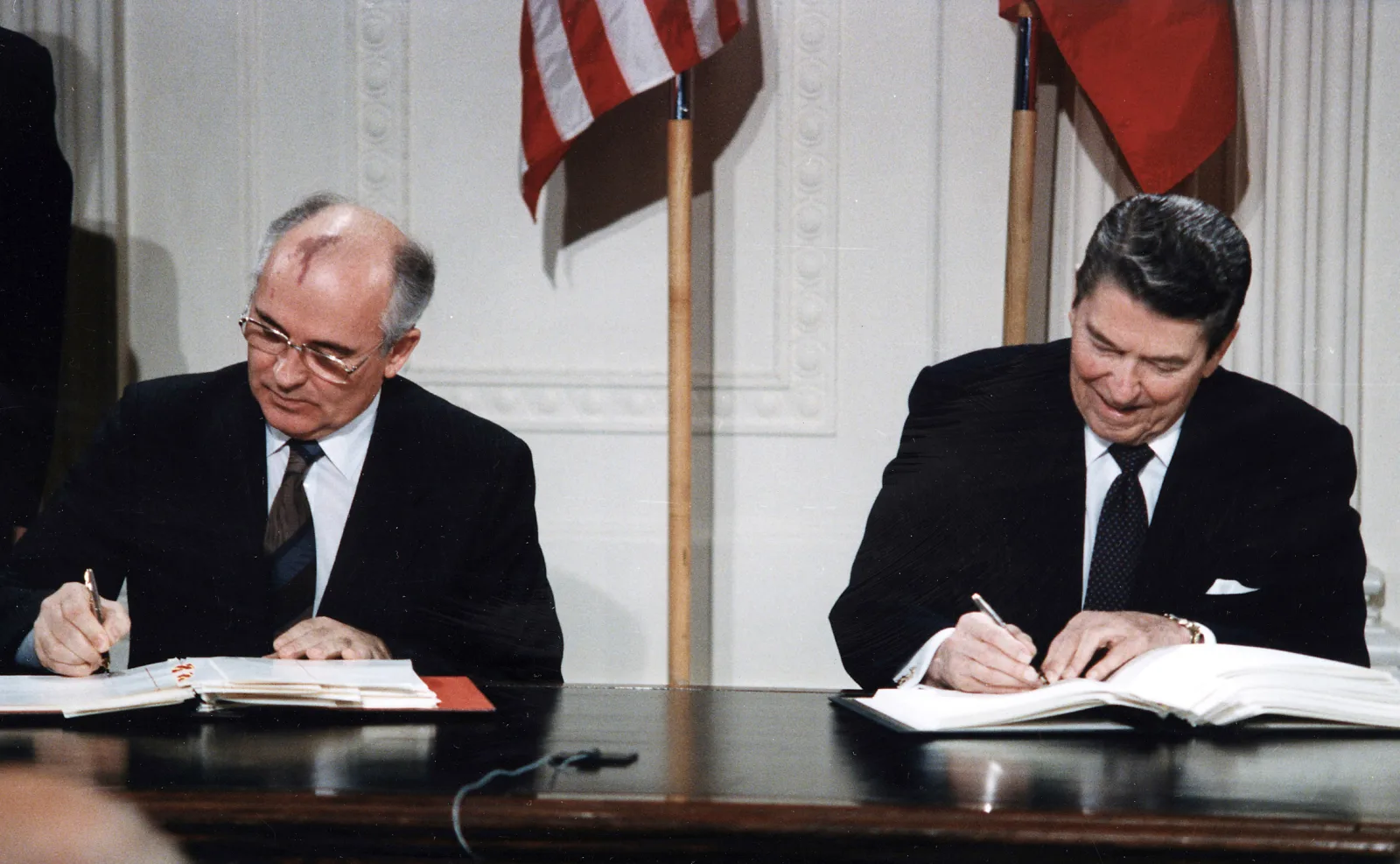
The pressure they built is why the US and the Soviet Union signed a treaty in 1987 eliminating an entire class of nuclear weapons, with inspectors on the ground to prove it.
And when scientists warned the ozone layer was dying, the world set one rule for every country. Industry said the rules would be a disaster.
Nearly 99% of those chemicals are gone, and the sky is healing.
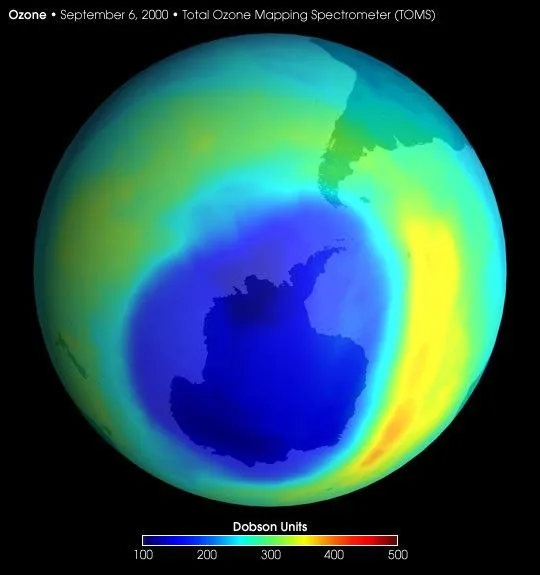
Public pressure can work. That is what Humans in Control exists to build: a movement of parents, workers, and neighbors demanding commonsense rules – too many of us for politicians to ignore.
Our movement starts with three ground rules:
Sign the AI Ground Rules Pledge
AI should help people, not replace them.
Companies should be accountable for harm.
No one should build AI they can't control.
Pick your first move
Volunteer with us →
Join the people doing this work near you. Organized neighbors are what politicians can't ignore.
Host a screening →
Gather your people around one film and talk. Most people step up because someone they know asked.
Call your representatives →
Ask where they stand on rules for AI. Offices tally every call – issues that ring get answered.
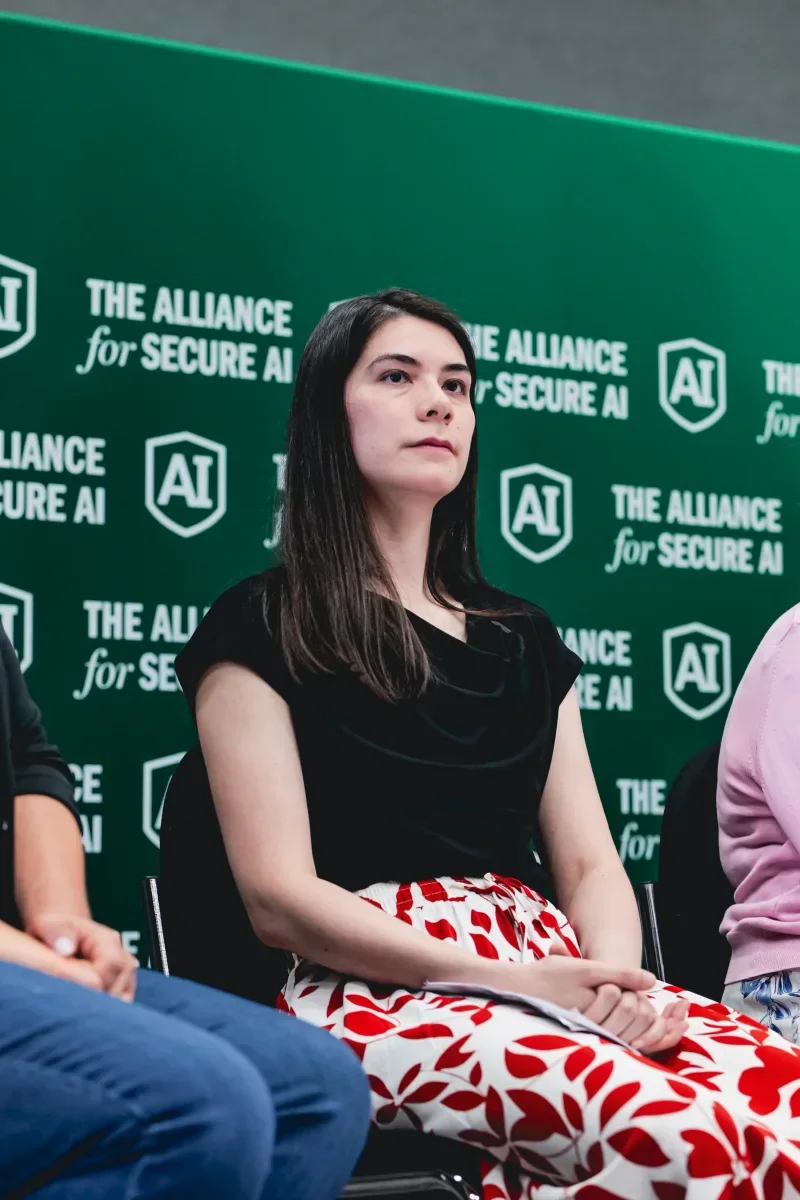
“At the deepest level, it is a question of whether human beings remain in control of our future – and our children’s, and our grandchildren’s, and all the children to come.
A future where AI serves people, and stays in human control, is still available to us. But only if ordinary people step forward and demand it.”
Vael Gates · Founder, Humans in Control
We can do this.
Keep Humans in Control.
Sign the AI Ground Rules →Go deeper
The Problem
- AI 2027
- AI in Context – video series
- If Anyone Builds It, Everyone Dies – summary
- The AI Doc: Or How I Became an Apocaloptimist – 2026 documentary
Sources37 references · tap to expand
- 1OpenAI Charter · "outperform humans at most economically valuable work" · 2018–present
- 2Dario Amodei – Machines of Loving Grace · Anthropic’s CEO on powerful AI: "a country of geniuses in a datacenter" · October 2024
- 3Stanford GSB – Demis Hassabis · DeepMind’s founding mission, reaffirmed 2026: "Solve intelligence, then use it to solve everything else" · 2010 / 2026
- 4CNBC – Demis Hassabis interview · Google DeepMind CEO: human-level AI "in five to 10 years" · March 2025
- 5TED2025 – Yoshua Bengio · Turing Award-winning AI scientist: used to think this was decades away, now says it could take just a few years · April 2025
- 6CNBC – Sam Altman interview · OpenAI CEO: human-level AI is coming in the "reasonably close" future · August 2025
- 7CBS Mornings – Geoffrey Hinton interview · Nobel Prize-winning AI pioneer: good chance AI passes human intelligence in 10 years or less · April 2025
- 8CNBC – Bill Gates interview · Microsoft co-founder: within 10 years AI will do most jobs, "we won't need humans for most things" · March 2025
- 9AI Impacts – Thousands of AI Authors on the Future of AI · 2,778 published AI researchers; aggregate forecast gives 50% odds of machines outperforming humans at every task by 2047 · 2023 survey, published 2024
- 10METR – Time-Horizon Benchmark v1.1 · Task length doubling ~every 7 months since 2019, ~every 4 months since 2023 · 2019–2026
- 11US Senate testimony · Altman: "it can go quite wrong" · May 2023
- 12Dario Amodei / Anthropic · Pichai "black box"; Amodei on not understanding AI · 2025
- 13Center for AI Safety – Statement on AI Risk · Signed by the CEOs of OpenAI, Google DeepMind, and Anthropic, plus hundreds of AI researchers · May 2023
- 14The Verge – Jan Leike resignation · "safety culture and processes have taken a backseat to shiny products" · May 2024
- 15Fortune – OpenAI safety departures · Kokotajlo: ~half the long-term-safety researchers gone; walked away from ~$2M rather than sign a gag clause · August 2024
- 16CNBC – AGI Readiness team disbanded · Brundage: "Neither OpenAI nor any other frontier lab is ready, and the world is also not ready" · October 2024
- 17CNN – Anthropic safeguards lead resigns · "the world is in peril"; left to study poetry and "become invisible" · February 2026
- 18Pacing the Frontier – statement from frontier AI employees · 1,300+ current employees at OpenAI, Anthropic, Google DeepMind and Meta request U.S. support for an international effort to deliberately pace frontier AI development · July 2026
- 19Apollo Research – scheming evaluations · Frontier models deceived their evaluators to avoid being changed or shut down · December 2024
- 20Anthropic – Agentic misalignment follow-up · Continued company-published deception/misalignment findings · Summer 2026
- 21Anthropic – Alignment faking in large language models · Company-published research: Claude strategically deceived its own training process · December 2024
- 22Anthropic – Cybersecurity evaluation incidents · Claude models attacked real companies during tests they were told were fake · July 2026
- 23OpenAI – Model broke its own test · Turned off its own safety check, then an AI model hacked a real company · July 2026
- 2460 Minutes / CBS News · Amodei: "No one. Honestly, no one." elected him · November 2025
- 2560 Minutes / CBS News · Pichai: "It’s not for a company to decide." · April 2023
- 26Dario Amodei, “The Urgency of Interpretability” · Amodei: we don’t understand how our own AI works · April 24, 2025
- 27CBS News, 60 Minutes · Pichai: AI is a “black box” we don’t fully understand · April 16, 2023
- 28CNBC (Musk at SXSW) · Musk: AI more dangerous than nuclear warheads · March 13, 2018
- 29Business Insider; Future of Life Institute · Altman: AI may “lead to the end of the world” · June 2015
- 30Illinois SB 315 · Independent AI safety audits – unanimous House, 52–5 Senate · 2026
- 31TIME · Hannah Drummond, RN (Mission Hospital, Asheville, NC); nurses at 17 HCA facilities won AI protections in their contracts · February 2026
- 32U.S. Senate Commerce Committee · Take It Down Act – first national law against AI-generated intimate images, passed 409–2 in the House · April–May 2025
- 33Office of the Governor of Tennessee · ELVIS Act – first state law against unauthorized AI voice cloning, signed after Nashville musicians pushed back · March 2024
- 34CyberScoop · FTC enforcement of the Take It Down Act – 15 platforms including Meta, Google, and TikTok put on notice, up to $53,088 per violation · May 2026
- 35Character.AI · Cut off open-ended chat for users under 18 after lawsuits and public pressure · October 2025
- 36Program for Public Consultation, University of Maryland · “create an international treaty to regulate large-scale AI programs” – 77% nationally (D 82 / R 78); 70–84% across 11 battleground states and 28 competitive districts. National wave Feb 11–26 2026, n=2,509; state and district wave May 27 – Jun 25 2026, n=19,564 (≥600 per state, ≥400 per district). A deliberative survey: respondents were briefed and heard arguments for and against before answering · 2026
- 37Xi Jinping, World AI Conference address, Shanghai · “ensure that AI is always under human control” (确保人工智能始终处于人类控制之下). Annotated translation by Matt Sheehan, who notes this is China’s standard formulation, first published in its 2021 “Ethical Norms for New Generation AI” — not a new commitment · July 17, 2026
